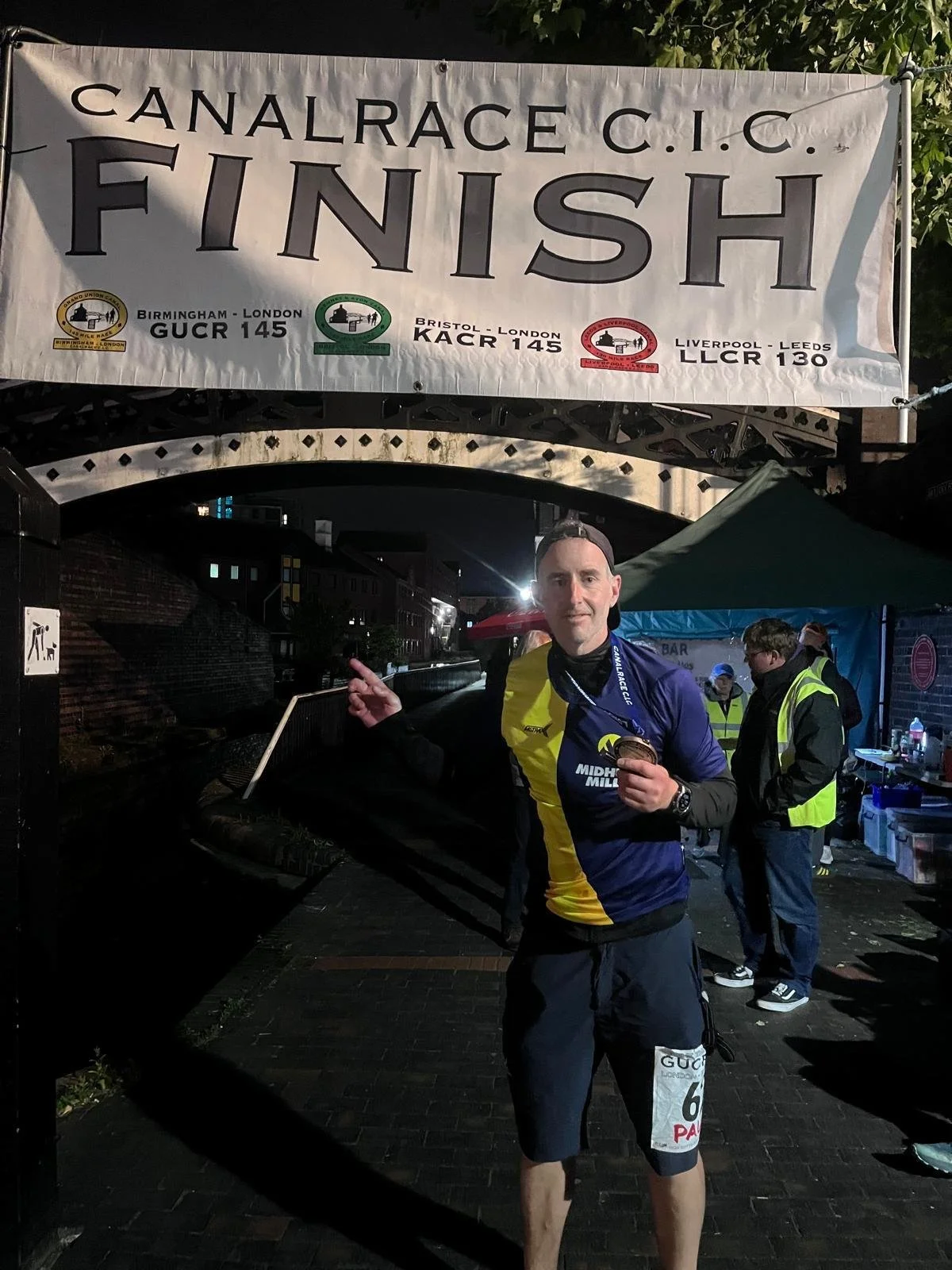
Pushing Limits on the Grand Union Canal Race.
A Paul Williams Story.
At 53, Paul Williams has discovered just how far he can push both his body and mind. But like many runners, his relationship with running didn’t exactly start with love.
“I guess like many people who grew up with cross-country at school, running felt more like punishment,” Paul says. It wasn’t until his mid-30s that things changed. Inspired by his brother — who was preparing for the London Marathon and tackling 50k races — Paul decided to give running a serious go. “I didn’t even know losing toenails was a thing until then,” he laughs.
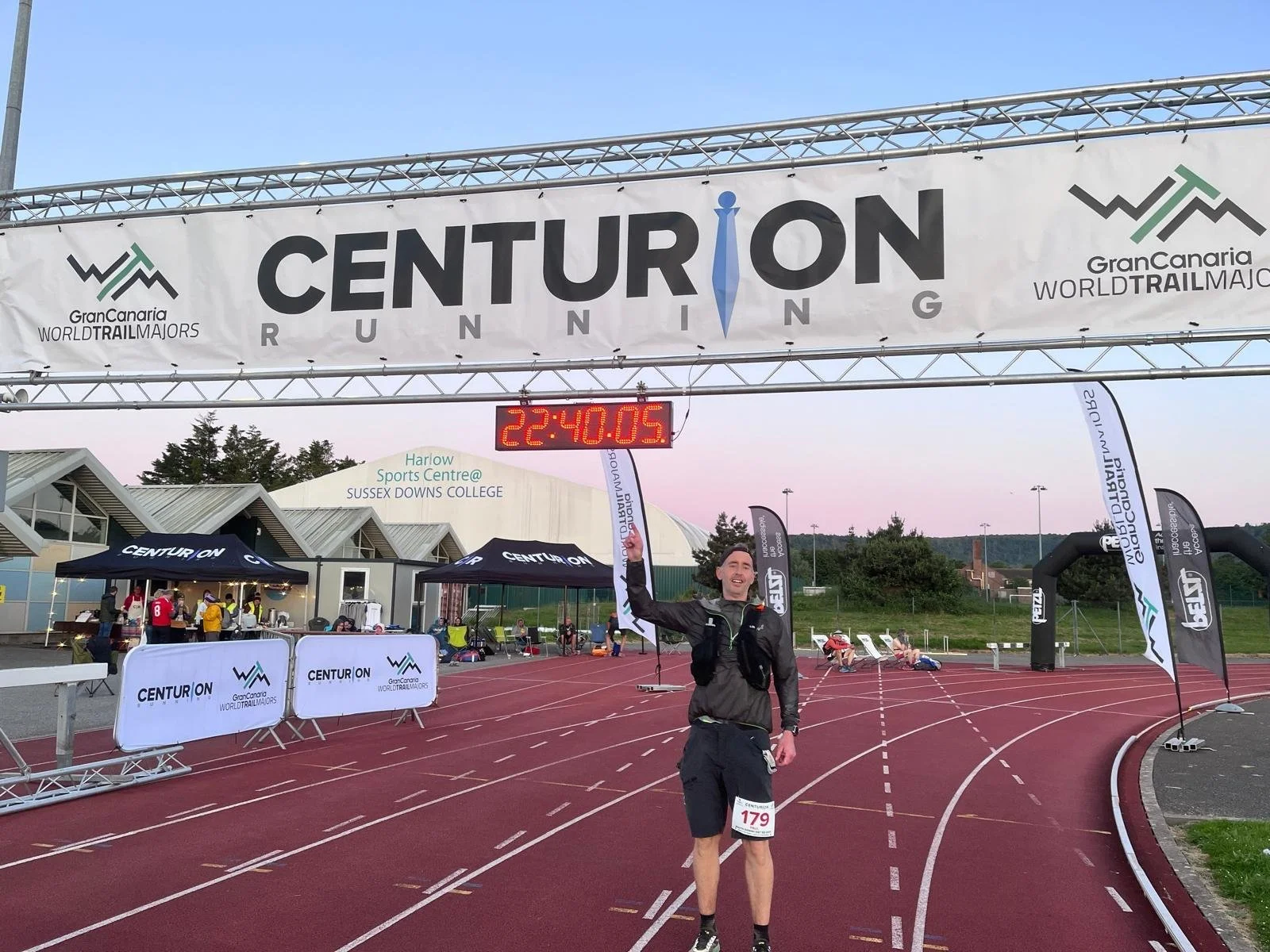
His first ultra marathon came in 2019 at the Race to the Tower in the Cotswolds. Since then, he’s steadily pushed his limits, with one of his standout achievements being completing the South Downs Way 100 in under 24 hours in 2024. “It was an incredible experience.” But Paul wasn’t finished pushing boundaries yet.
Taking on the Grand Union Canal Race
A few months after completing the South Downs Way 100, Paul heard about the Grand Union Canal Race — a daunting 145-mile ultra stretching from Birmingham to London. “I knew nothing about it at the time,” he admits. “But the distance really caught my attention. It seemed like another opportunity to see how far I could push the running experience.” As luck would have it, the race ballot opened just as Paul was researching the event. “So I signed up.”
Balancing Training with Life
Training for an ultra of that scale is no small commitment, especially alongside a full-time job. Paul didn’t follow a strict training programme, instead focusing on consistency. “I tried to fit in at least four runs a week, with one long run at the weekend,” he explains. “It’s difficult to work full time, train enough for such a daunting event, and still have a life.” That balance is something many endurance runners will recognise.
The Mental Game
In ultra running, the mental challenge can often be just as tough as the physical one. For Paul, experience helped build confidence in his ability to ride out the inevitable low points. “I’ve always tried to enjoy the race and simply aim to finish. A great time is just an added bonus.”
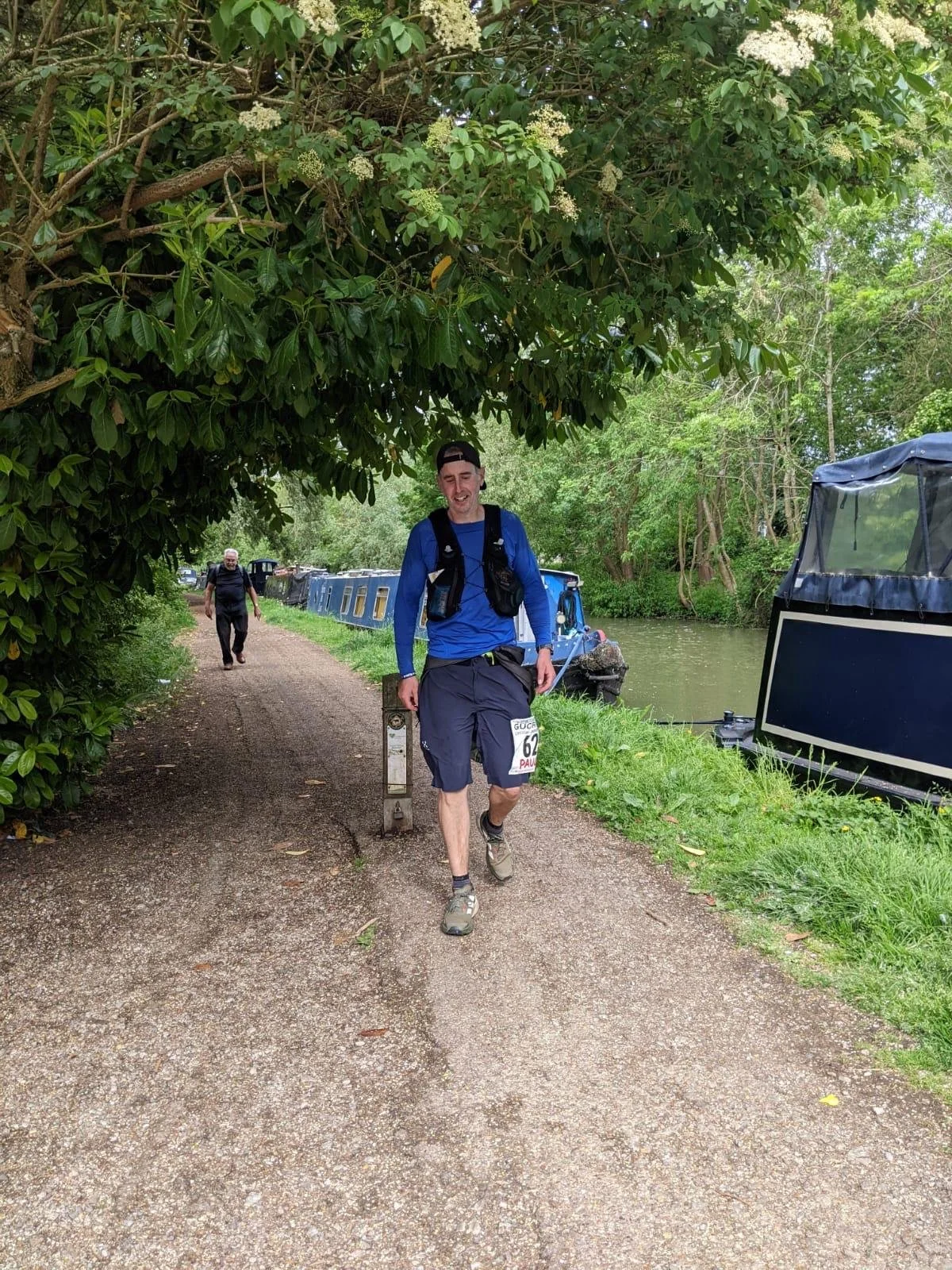
The scale of the race was intimidating — from the huge distance to the self-navigation and long stretches between checkpoints. “I tried not to think about it too much beforehand. Once the race started and I’d run a few miles, the nerves faded away.”
Race Kit and Preparation
With up to 45 hours to complete the race, preparation was key. The organisers provided a mandatory kit list, but Paul says much of his gear was similar to what he’d take for any ultra. “The main difference was planning for the length of time out there.”
Fortunately, the weather was kind. “We were lucky — predominantly dry, overcast, and warm.” His kit included warmer clothes for the night sections, a couple of torches, and a battery charger. Runners’ kit bags were transported between checkpoints, making the logistics far easier. “The race was brilliantly organised.”
Fuelling the Body
Nutrition is one of the toughest parts of ultra running — and things didn’t quite go to plan. Paul initially planned to walk briefly every 30 minutes to eat and drink. But as the race went on, nausea crept in. “Once that kicked in during the first night, it became really difficult to eat or drink anything I was carrying.” By the second day, his diet had changed dramatically. “I basically lived off soup and cups of tea at the checkpoints, with little or nothing in between.”
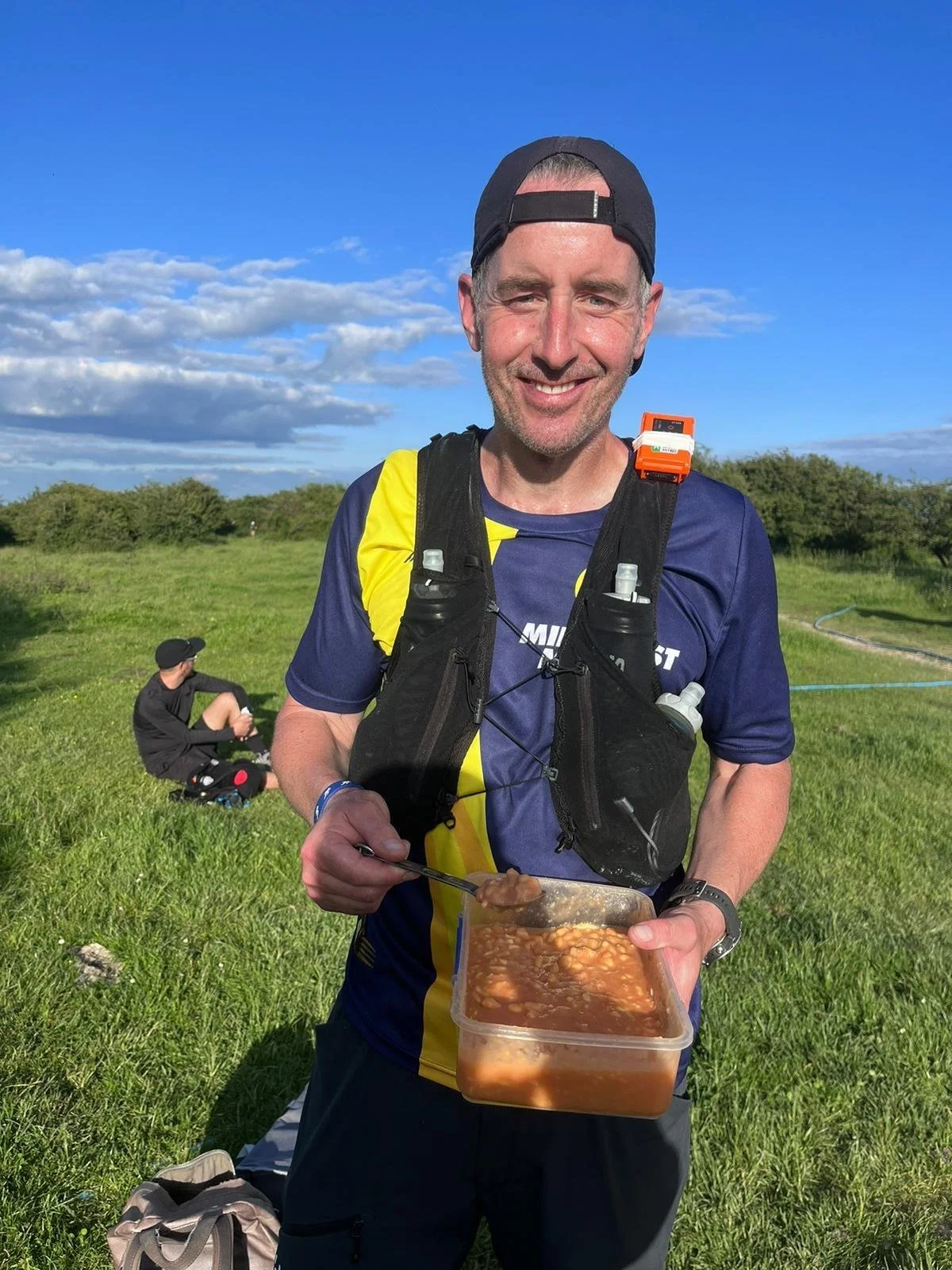
Paul's secret to success . . . cheesy beans and mash !
The Moments That Matter
Despite the physical pain and sickness, Paul says the mental side of the race was where he really succeeded. “I never had thoughts of giving up.” Along the canal route, he encountered countless small moments of kindness and encouragement. “I met amazing people along the way — volunteers, curious members of the public, people chatting from boats, even someone who stopped his car to offer runners food and drink.” There were even a few encouraging hugs from strangers — despite the less-than-fresh state runners were in after hours on the trail. Paul also credits his crew member for playing a huge role in getting him through the race. “The support was incredible.”
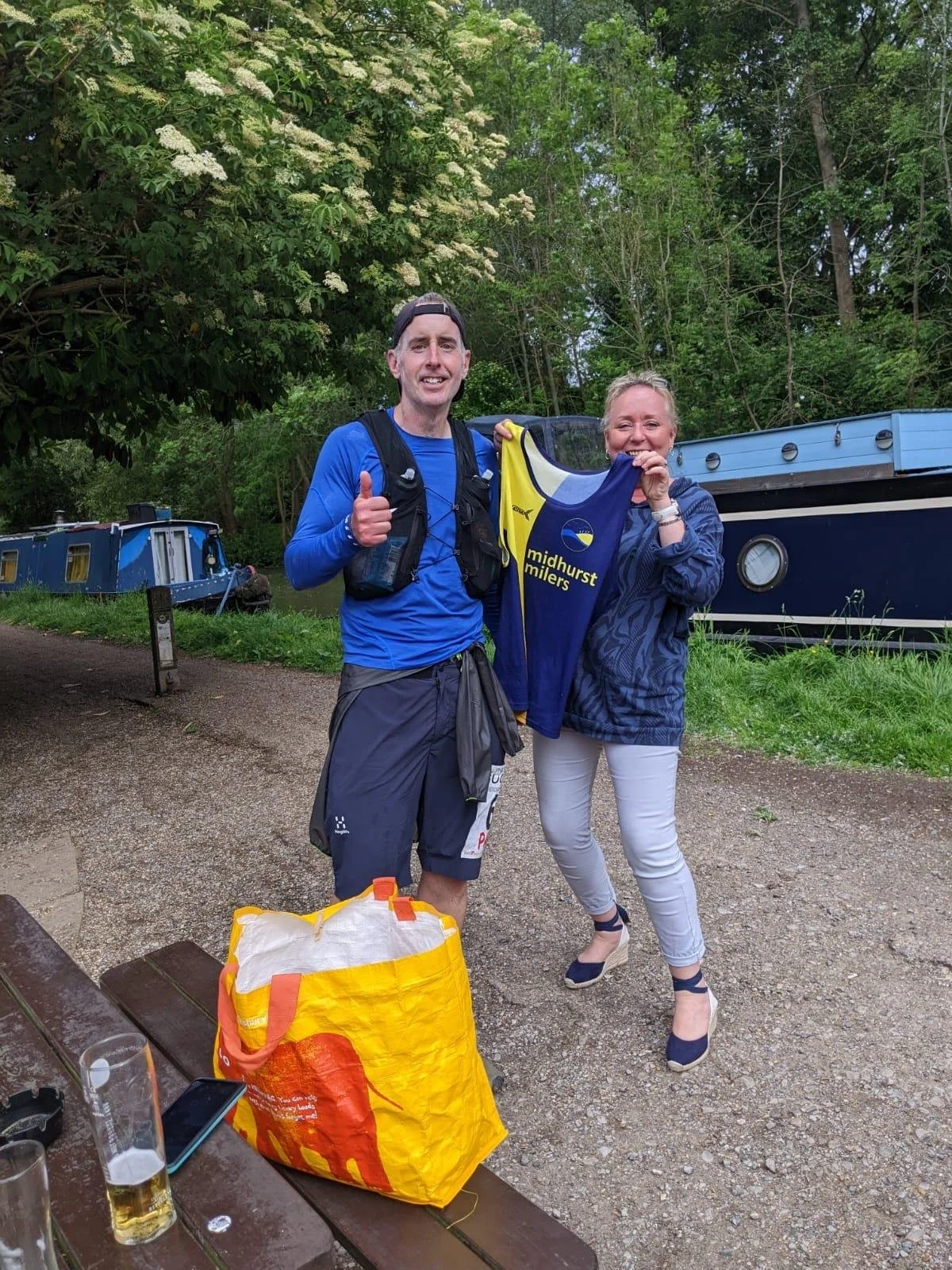
Amazing support from some of the Midhurst Milers.
Lessons Learned
If there was one thing Paul would change, it would be preparing better for sleep deprivation. “I had no plan or experience of coping with it.” By the afternoon of the second day, fatigue was beginning to take its toll. “By the evening I was struggling with balance.” Low bridges and narrow towpaths through central Birmingham made those final miles even more challenging.
Advice for First-Time Ultra Runners
For anyone thinking about taking on their first ultra marathon, Paul has simple advice: “Just sign up and worry about the consequences later.” He believes the challenge is worth every moment of discomfort. “As tough as they are, I’ve never heard anyone regret it.”
Ultra running, he says, offers something few other experiences can. “It’s an exhilarating and emotional journey. There aren’t many opportunities in life to push yourself physically and mentally beyond what you ever thought was possible.”