A Nick Savage story
Couch to 270km . . .
I never thought of myself a runner in my early years - it was always something that I had considered to be a school chore when I was growing up, or it was my father telling me that we were going out to run around “the block” because it would be good for me. I of course never agreed that it was, but nevertheless I would always follow suit because it was something that he really enjoyed - as I would later come to realise …
In 2023, I found myself living in Midhurst, in the heart of town to be exact - the perfect place to observe the ‘comings and goings’ of local life. I had, at the same time, decided that I wanted to start running again and so I downloaded the Couch-to-5K app and elected to have Denise Lewis as my virtual coach. She was everything that I had hoped for, enthusiastic and complimentary, but there was a problem - I found it so incredibly boring. I had no reference as to my progress - sure, Denise was telling me “you’ve got this”, but I never felt that I had - and so I stopped half way through the program, and bid farewell to Denise. Rather dejected, I was back at square one … and then came the Midhurst Milers, who I had seen running down the High Street one evening.
A quick call to someone calling themselves Nick Thorpe convinced me that joining a running club would be the best thing for me, and so it proved to be the case. An enthusiastic group met at The Grange one Wednesday evening, and so began the journey that has led me to where I am today. A C25K WhatsApp group was set up so that we could ‘interact’ with each other which helped enormously - there is something that is very comforting about knowing that you are not alone at the start of a journey, and early tentative exchanges soon turned into friendship(s) and the desire for my fellow cohorts to succeed in their own respective journey(s). To expand, the programme followed the same one that I had tried with Denise, but running with other people who were on the same path as me made the real difference - there were others who wanted to achieve the same goal that I did, with the help of actual people offering encouragement. A few people dropped out along the way - through other commitments, an inevitability - but three of us reached the end which culminated in our first Park Run in Chichester. The day finally came (27th May), and we set off on our first ‘competitive’ run … The feeling at the end was incredible; not only had I run 5km non-stop with the support of Helen S, but I had actually enjoyed it! The sense of achievement was something that still lives with me to this day, and certainly a feeling I still get at the end of each run.
Graduating to the established Midhurst Milers WhatsApp group came next - and that revealed what running with likeminded people truly felt like. Early nerves (we were running with the serial runners now!) soon dissipated, and joining the Milers for three runs a week very quickly felt natural - in fact, it was something that I very much looked forward to. Out of the three apparent disciplines available - steady / mid pace / speedy, I settled into life with the ‘steadies’ and built on my confidence that way. I was not trying to achieve anything other than building rhythm, and getting to the stage that I wanted to feel disappointed if I did not go out for a run with the group at every opportunity. Towards the end of the year I was feeling comfortable, I had found my confidence, I had also found a new group of friends.
2024 was about speed . . .
In February of 2024, I was told by my doctor that I was pre-diabetic, and that I needed to change a few bad habits if I wanted to avoid it developing further. My father was type 2 and so I knew only too well of the challenges that he faced in later life. In many ways it was a re-set moment, a wakeup call to get fit and stave off the disease whilst there was still time. My mindset changed overnight - running suddenly became more about fitness, and not so much about the social element. Looking back on it, running was the thing that made the biggest difference - both emotionally and physically. As the weeks went by, I found that I could run further, my speed was getting better, and most importantly, I was feeling mentally stronger - I felt able to go take on challenges that I would have perhaps otherwise shied away from - I was pushing myself harder. Notable events followed, each one bringing with it a desire to chase a time - set a benchmark of sorts, and be quicker the next time I attempted the same distance …
Run Wisborough 10km
Chichester Half Marathon
2025 was about distance . . .
After the Milers Christmas party in 2024, I made the decision to turn my attention to longer distances. I knew that it would require a different mind/skill set, but it seemed the right time to ‘see’ what else was out there. People in the Club had undertaken some fantastic challenges, and I wanted to see if I could get close to ever achieving an Ultra Marathon myself. My first event was the Southdown and Arundel Marathon at the end of January ’25 … Having never thought it was possible, I suddenly found myself standing in Heyshott, with the prospect of having to run back to the car which was parked in Arundel. As I stood at the start-line, I was full of every emotion - what lay ahead was a pretty bleak day, with weather that almost made me quit as the race went on, but as I crossed the finish line, I knew that I had achieved something that I never thought possible 12 months prior. I quickly signed up for more with one notable date in the diary - the Serpent Trail 100km in early July. On the face of it, going from 20km in 2024 to 100km was something that I should never have contemplated, yet it was a certain fellow Miler, who I had respected up until that point, who made it clear that I should undertake it and so with little persuasion, I visited the website and paid the first instalment. Going from 42km in January to 100km in a little over 5 months later never really computed with me, but that was made all the more real when I ran the Springtide 50km in April - an event that starts/finishes in Arundel, taking on some of the SDW. I crossed the finish line after that event with mixed emotions - yes, I had completed my first Ultra, but in less than 3 months time, I was going to have to run that distance again, on the same day! Mentally I was all over the place, thrilled yet petrified - what had Paul W talked me into … A week or so later I was back at The Grange one Tuesday evening, back with my running pals - still with mixed emotions. Speaking about my doubts for the 100km, I was told by a wise Miler that it was simply a mental barrier - I had stood on the start-line of the Springtide, and told myself that all I had to do was complete 50km that day and that I would be telling myself to finish the 100km in much the same way in just a few weeks time. Nicky C was right, and after ticking off the another 50km (the SDW50), I got off the coach in Haslemere High Street just before 6am at the start of the Serpent Trail, and with a few words of encouragement from James J at the start line, I set off - it was all unchartered territory from here on in . . .
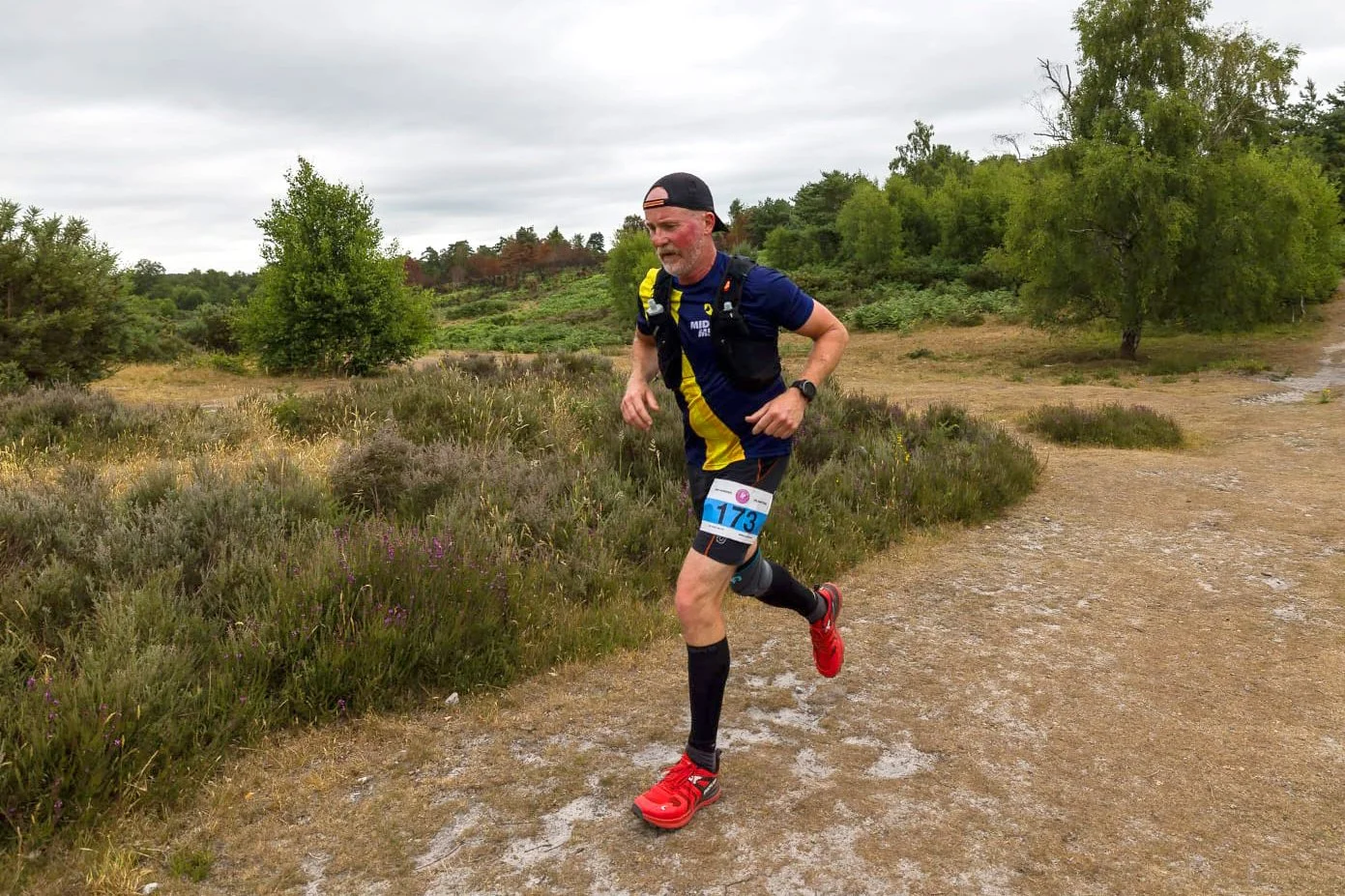
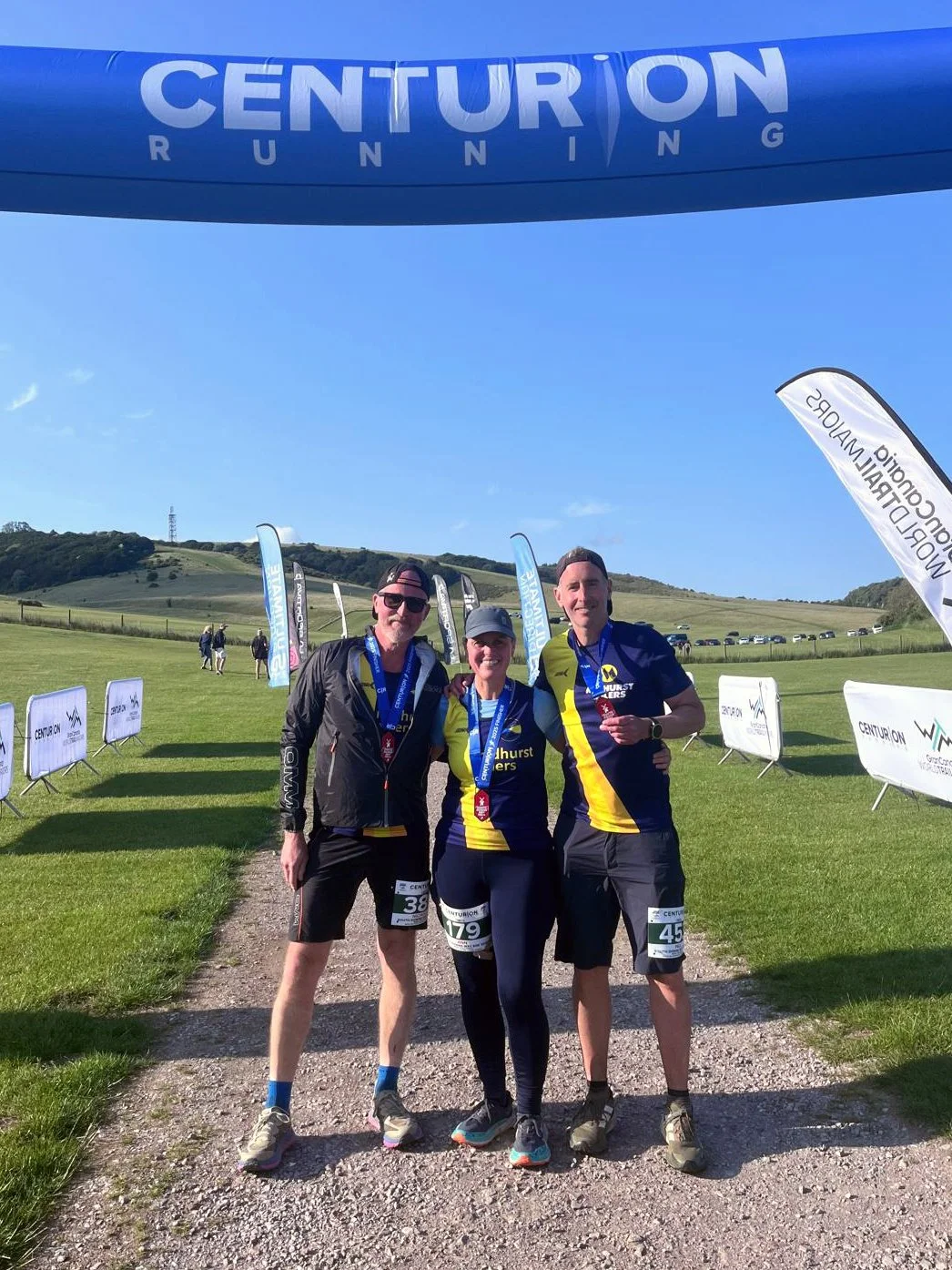
One of the things that I have most embraced and love about the Midhurst Milers is very simply the people. Each and every person is on their own journey, and the camaraderie and genuine support that is shared amongst ‘the gang’ is something that I cherish a great deal. That support helps me in more ways than I can express, and nothing gives me more of a lift than to see people take on, and achieve their own goals in whatever shape or form that materialises itself - from their first 5km, to beating a PB through hard work and determination. Having people share their free time to support fellow Milers is also something very special - to see a familiar face at a check-point, or at the start/end of a race gives me a lift like nothing else, and it is down to the Club that I have taken on, and achieved some of my biggest running challenges, and it was with the help of the Milers that I was able to complete my first 100km in a little over 13 hours.
Other notable events:
100km Serpent Trail Relay with the Milers (running as part of a group of 3)
Milers Backyard Ultra (tapping out after 9 loops)
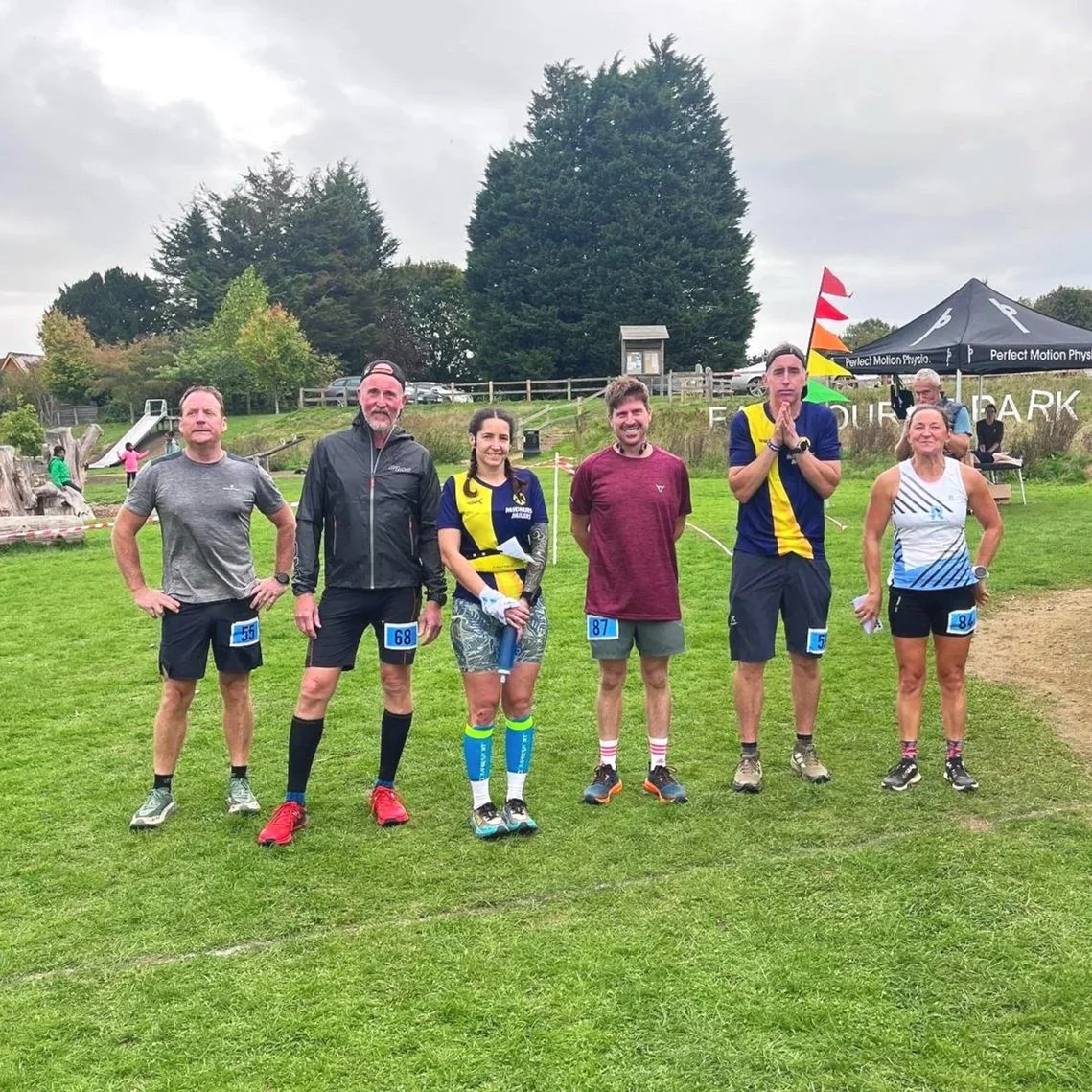
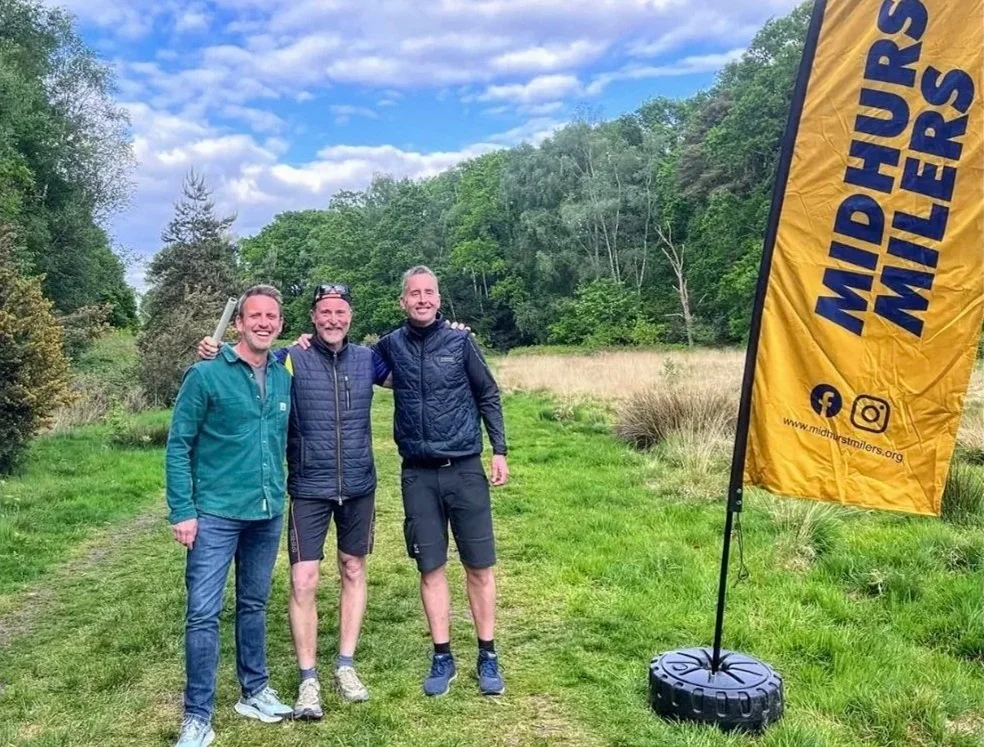
2026 was only ever about one event . . .
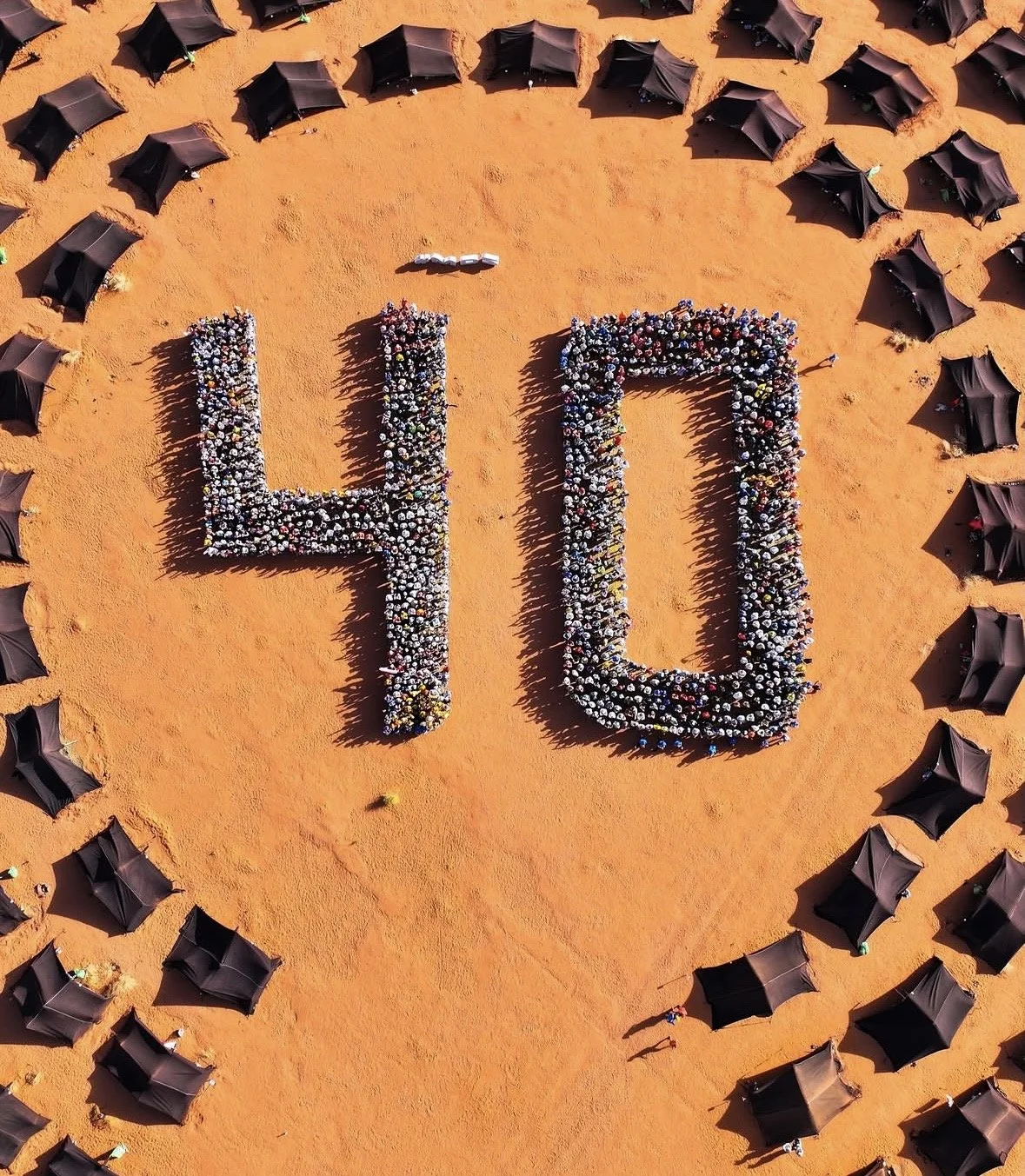
I had read about the Marathon des Sables long before I took up running again (my sister had presented me with a copy of the Lonely Planets Epic Runs Of The World), and had always looked at it in wonderment - why would anyone wish to run 250km in the desert carrying everything you need to be self-sufficient, it sounded like utter madness! I had watched documentaries about it too, and followed people like Fiona Oakes who took it on - all absolute heroes who had incredible stories to tell in their own right - and to me, it sounded like something that only serious athletes took on, people who had trained for it for years. At the beginning of 2025, I did not set out to enter it, but after my first few Ultra’s, I felt that it was something that I could aim for. In my mind, there was something iconic about the 2026 event too, it was to be the 40th edition and that sounded like a nice round number to me, so I convinced myself that I would try and get a place on it. One evening in early June, I sat at my laptop waiting for the entry page to open … With my place confirmed, I parked it in the back of my mind and carried on as if nothing was any different - I told my family and a few friends, but I did not tell anyone at the club for a few months, I guess I did not want the added pressure as there were many other people that were doing great things and had run their own iconic races. No, I decided to keep it to myself until I felt ready.
It started getting very real in October. I went to a MDS forum up in London - a chance to meet past participants, and learn more about how to tackle it from a mental perspective, and it was there that it was revealed that it was going to be 270km, with the long leg increasing in length from 84km to 100km. One of the most useful things we were told was to think about how we wanted to approach it - was I someone that wanted to run it, run/walk it, or just walk the entire distance. To be honest, I had never really though about how I was going to approach any of my races ahead of standing on the start-line, but this was different, I was going to have to take on a multi-stage event over seven days and be very disciplined about what I was going to take with me. One of the speakers was a gentleman called Rory Coleman, a serial competitor who had undertaken the event many times and won many accolades, in his own right, along the way. He is an extremely likeable and knowledgable chap, and I was fortunate enough to share time with him on a couple of the stages this year, but all his talk that October day served to do was highlight just how difficult this was going to be. For those competing in 2026, a ‘tips-n-tricks’ WhatsApp group was set up by Rory, and people from all over the world signed up to it. It ended up being a huge wall of white noise for me - people announcing how they were preparing for it which only made me more anxious - why was I not running 100km+ every week with a rucksack full of flour packets, or eating daily rations whilst working out in a heat chamber?! It turned out to be all very unhelpful!
Whilst training was something that was always going to be extremely important, I was having to learn that it was not about getting from point A to point B in the quickest time - something that was very important to me in 2024. There are not many ways you can properly prepare - both physically and mentally - for MDS in the UK given that the weather is often so very bleak from October onwards, but I had to persist! They say ignorance is bliss - something that I often subscribe to - but I quickly learnt that the best way/s was just for me to keep enjoying running, and not look at it as a daily chore. I had spent time in the gym, as well as going on very long walks with the dog which helped me enormously, and I would encourage anyone to go out for a hike when the thought of running is too much. Looking back at it now, I would say that the biggest thing for me was the mental shift - belief in myself, and believing that anything is possible if approached with a positive mindset. Sure, physical fitness is extremely important too, but so is a strong mindset and a willingness to succeed. Early on I had decided that I was going to run my own race, and that proved to be a very valuable piece of advice to myself …
Ahead of the event, one of the things I did become paranoid about was picking up an injury, as I was running a lot more than I had been before - running slower/further, and on consecutive days as an example. And so it came to pass in January 2026, I picked up a niggling calf injury which was not going away. In any other world, I would have naturally stopped running for a few weeks, but I could not do that with an event that I had invested so much time and effort in. Naturally, a call to Perfect Motion Physio was made, and an appointment with Bill quickly followed. A few needling sessions ensued which certainly eased the situation, but I felt that had not pushed myself as hard as I had wanted to leading up to leaving on 01 April which played on my mind a great deal.
Before leaving, there was one last event that I took part in which was put forward as an idea by the MDS WhatsApp Group - the Pilgrim Challenge in February, a 66 mile out-and-back along part of the North Downs Way (Farnham to Redhill). For those wishing to participate over the two consecutive days, it meant spending Saturday night in a Redhill school sports hall - we presumed the idea behind that was for us to get used to sleeping in close proximity with fellow runners in a somewhat no-frills environment! It certainly helped, it gave me an insight in how to approach a multi day event on limited sleep, and it deepened my own understanding of how important tailoring the right nutrition for oneself is.
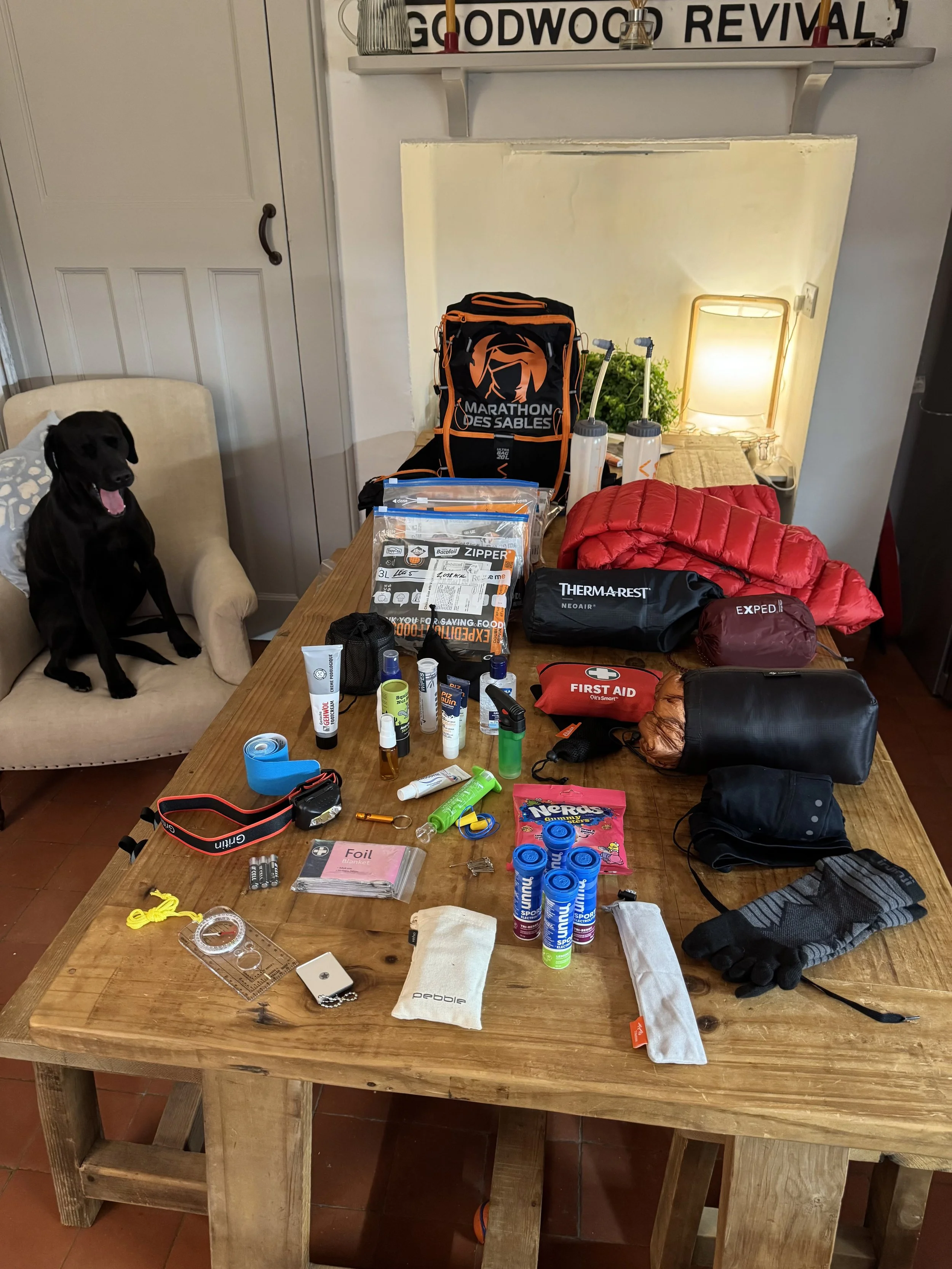
In the months prior to leaving, I had also purchased everything I was told to for being self sufficient for 7 days - from carrying the mandatory 2,000 calories of food per day in packet form (I cannot recommend Expedition Foods’ offerings highly enough), to survival items including a compass, a signal mirror, and Knor chicken stock cubes which were recommended as a form of daily salt intake. Trying to shoe-horn everything into a 20L rucksack was not the easiest thing I have ever had to do either, in fact it was extremely difficult when you are trying to balance what is needed vs. material weight, but it was all part of the learning process. My fully loaded rucksack ended up being 8.49kgs at the the technical check-in (excluding the mandatory 1.5L of water which is given to you in stages, and at each check-point), which when you factor in the terrain, and the heat, was very noticeable - throughout!
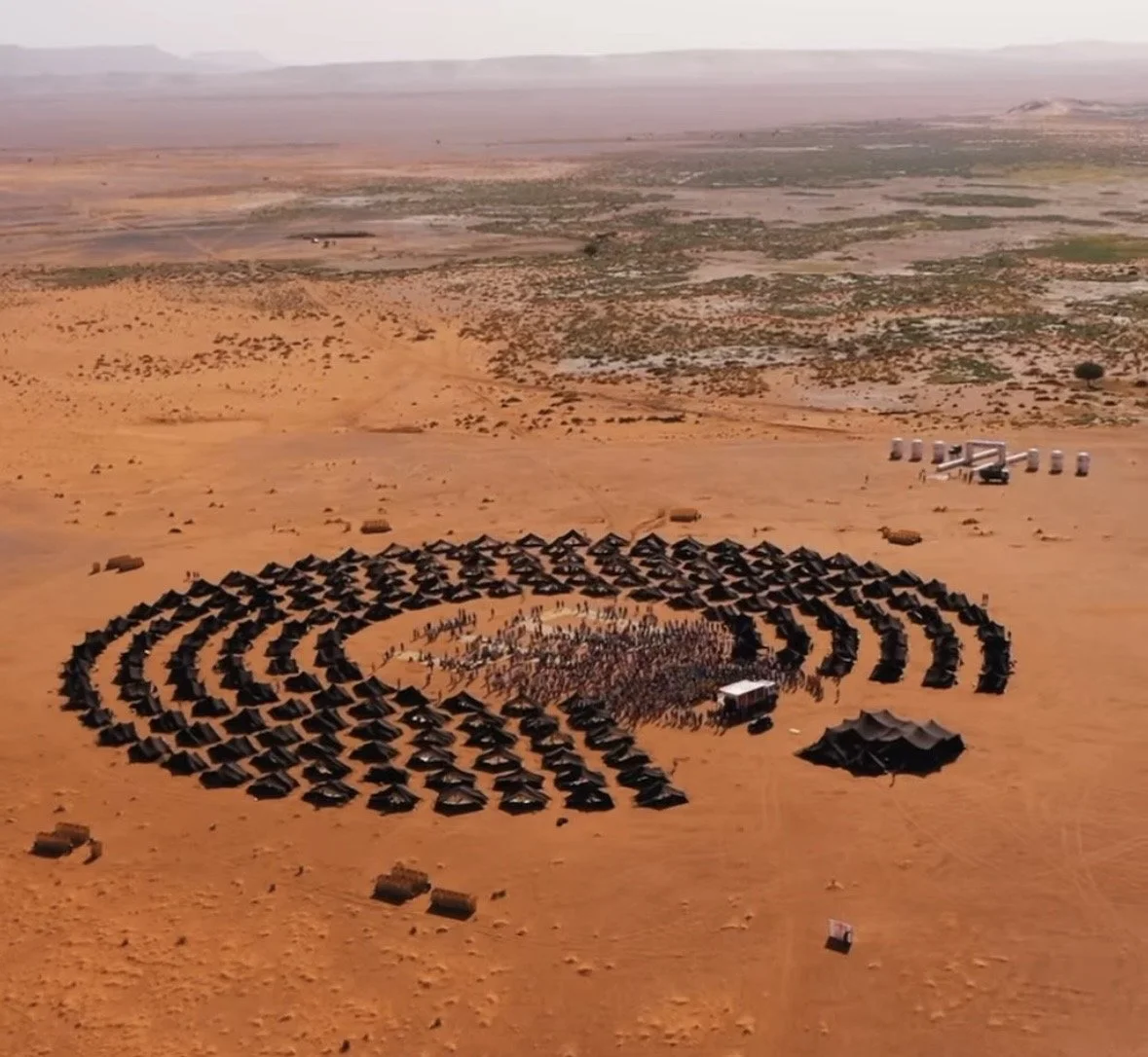
We were given our road book on the 6hr coach journey from Ouarzazate to an unidentified destination in the desert - a sea of old Berber tents arranged in concentric circles greeted us where we had 36hrs to acclimatise, meet our fellow tent mates (who would be the same for the duration), and carry out the technical check-in before the 7am start on Sunday 5th April - Day 1 of MDS ’26:
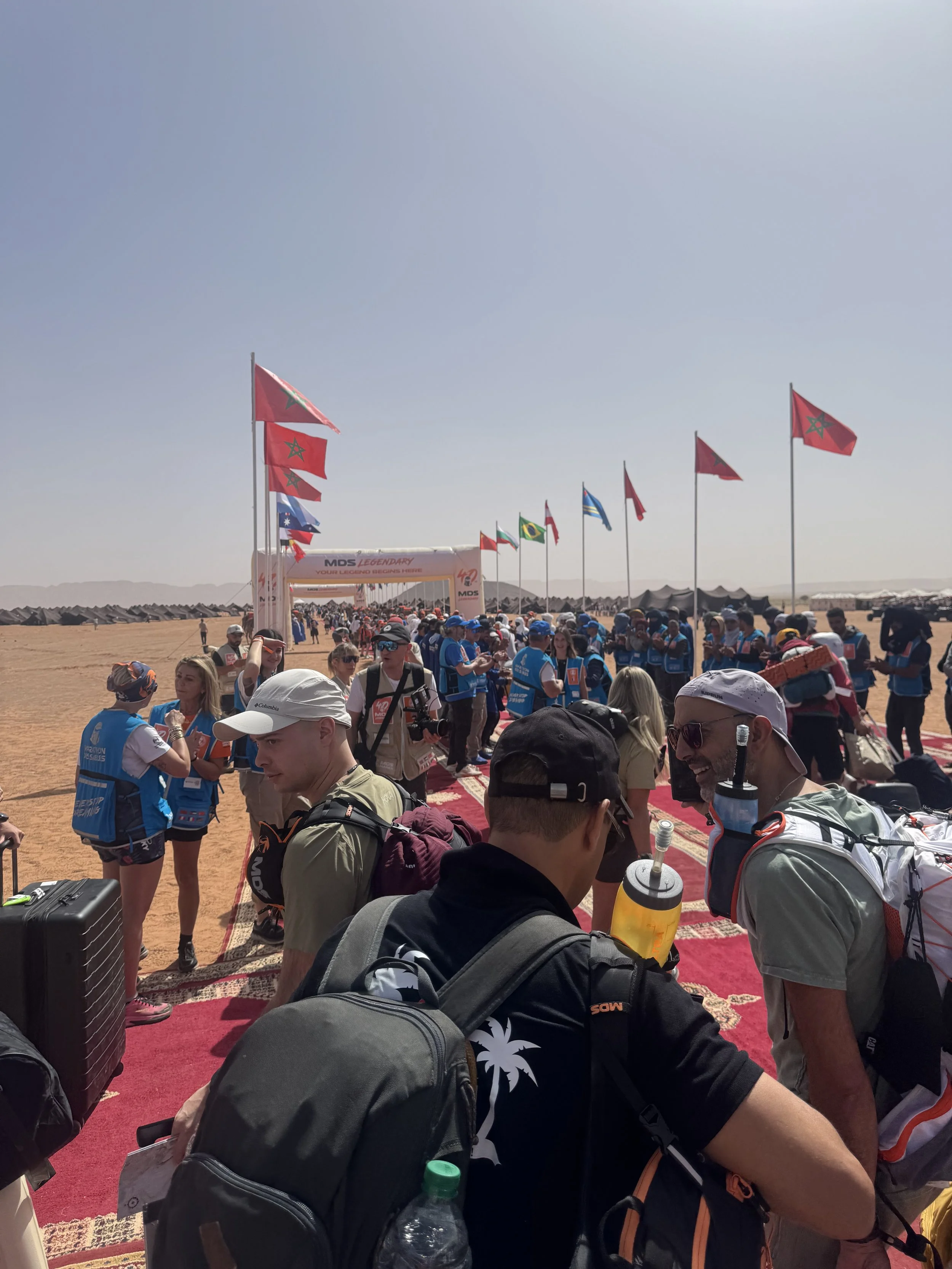
Day 1 (Start: 7am) - 35km / +285 m of climbing / Cut off: 10hrs
Day 2 (Start: 6am) - 40.5km / +486 m of climbing / Cut off: 11hrs 35mins
Day 3 (Start: 7am) - 29.1km / +413 m of climbing / Cut off: 8hrs 20mins
Day 4 (Start: 5am) - 100km / +721 m of climbing / Cut off: 40hrs
Day 5 *rest day (if you had already finished the 100km)
Day 6 (Start: 6:30am) - 42.2km / +424 m of climbing / Cut off: 12hrs 05mins
Day 7 (Start 6:30am) - 23.2km / +238 m of climbing / Cut off: 6hrs 40mins
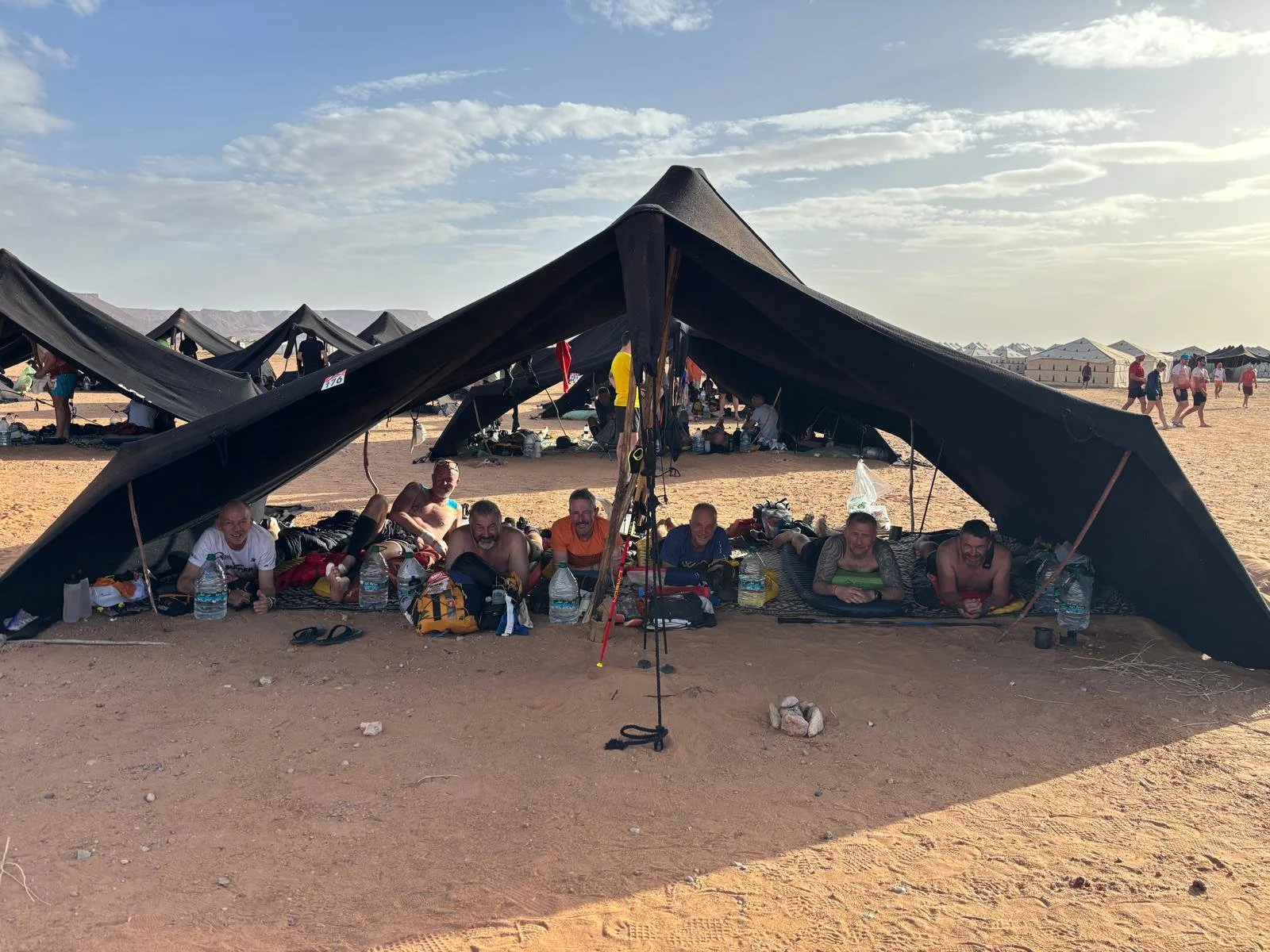
I had already met one of my tent mates - Paul from Petersfield - at the forum in London, so having a familiar face in the camp at the start was very comforting. The scale of what I was about to undertake became very real on the first night though - lying underneath the tent that had no front or back to it, consisting of seven strangers with our respective mattresses laid out in a sardine like fashion, with our rucksacks close-by (the contents of which you become very precious about). Looking out at a beautiful star studded night sky in total silence was very surreal, I was finally here, the wait was almost over, and that was a very humbling experience indeed …
The day of the technical check-in (Saturday) started badly for me. I woke early, and whilst tiptoeing my way out of the tent so as not to wake my fellow rent mates, I stumbled and fell onto my outstretched hand. The cracking sound that ensued was audible enough to stir the others, as was the cussing that followed as I made my way to the makeshift toilet block, clutching my throbbing hand - the pain was immense … As the day wore on, the swelling got to the point where I felt I could no longer ignore it. The on-site medical team took one look at it and after I explained what had happened, I was told that they needed to X-ray it. Immediately convinced that this meant a 6hr trip back to Ouarzazate to the hospital, I felt helpless and so very annoyed - would they tell me that I could not take part if they found it was broken. Fears eased somewhat as I was told that they had the facilities to carry it out on site, and I would know fairly quickly what the outcome was. I was led to a state of the art temporary building which had everything needed to deal with the more serious cases and in minutes, it was confirmed that I had indeed broken the fifth metacarpal in my right hand; I felt physically sick on hearing the news … The medical team are all volunteers; qualified doctors and nurses from all over the world meant that each of the international participants could communicate clearly with a professional about problems and fears, and so there I was, on the eve of something that had been in my head for so long, explaining the reasons why I wanted to be on the start line the following day. I was told that whilst they were not overly keen, they would splint my hand and allow me to start, but on the proviso that they wanted to keep an eye on it at the end of every day.
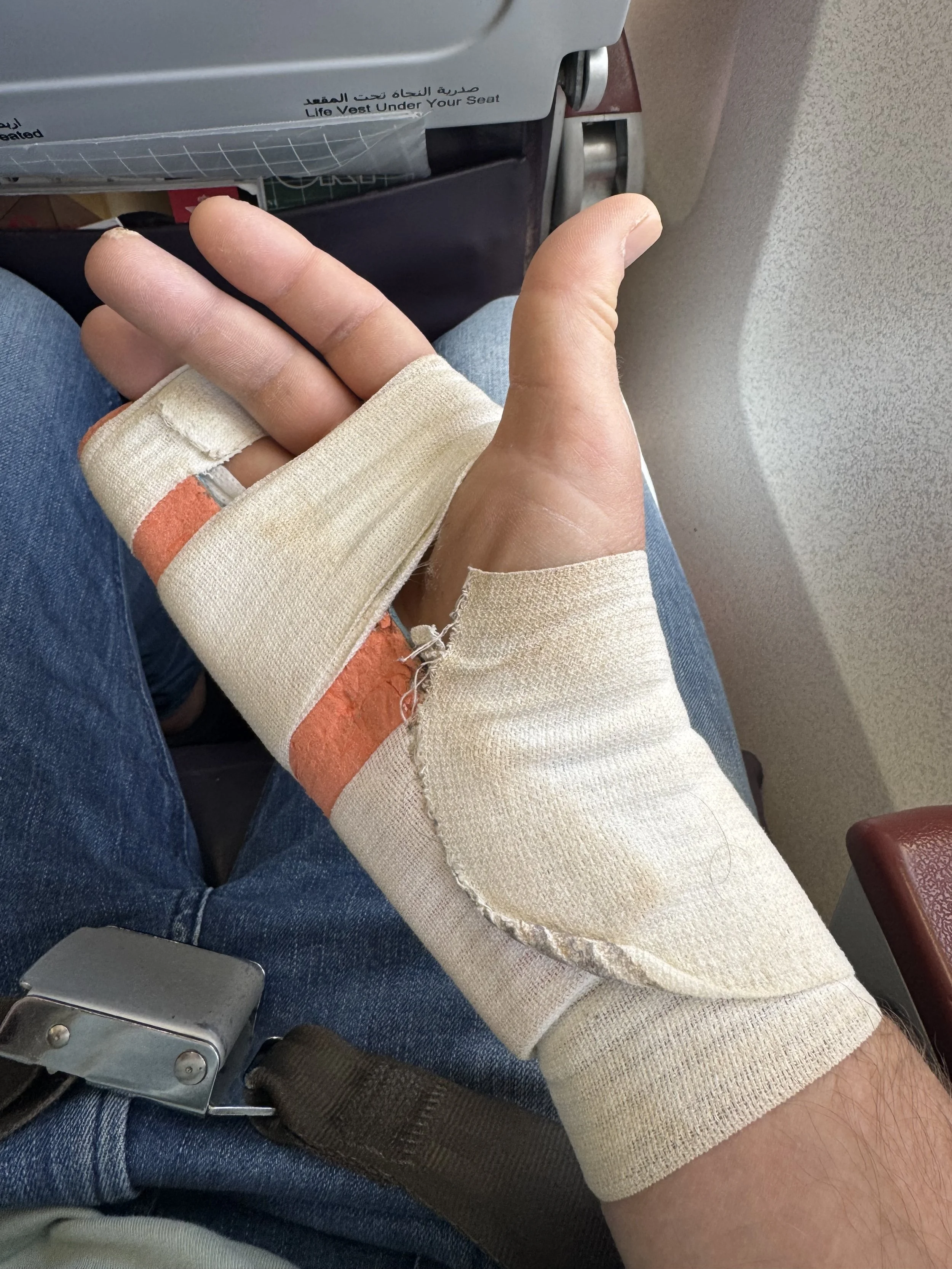
Undertaking an event that requires you to pack your belongings in such a way that allows them to fit inside a rucksack at the start of each day had taken weeks of practice, yet here I was at 5am on Day 1 (Sunday) with a hand that I was not able to use. I had taken running poles with me too, but now I could not use them as was intended which was an added mental pressure when thinking about the unknown that lay ahead.
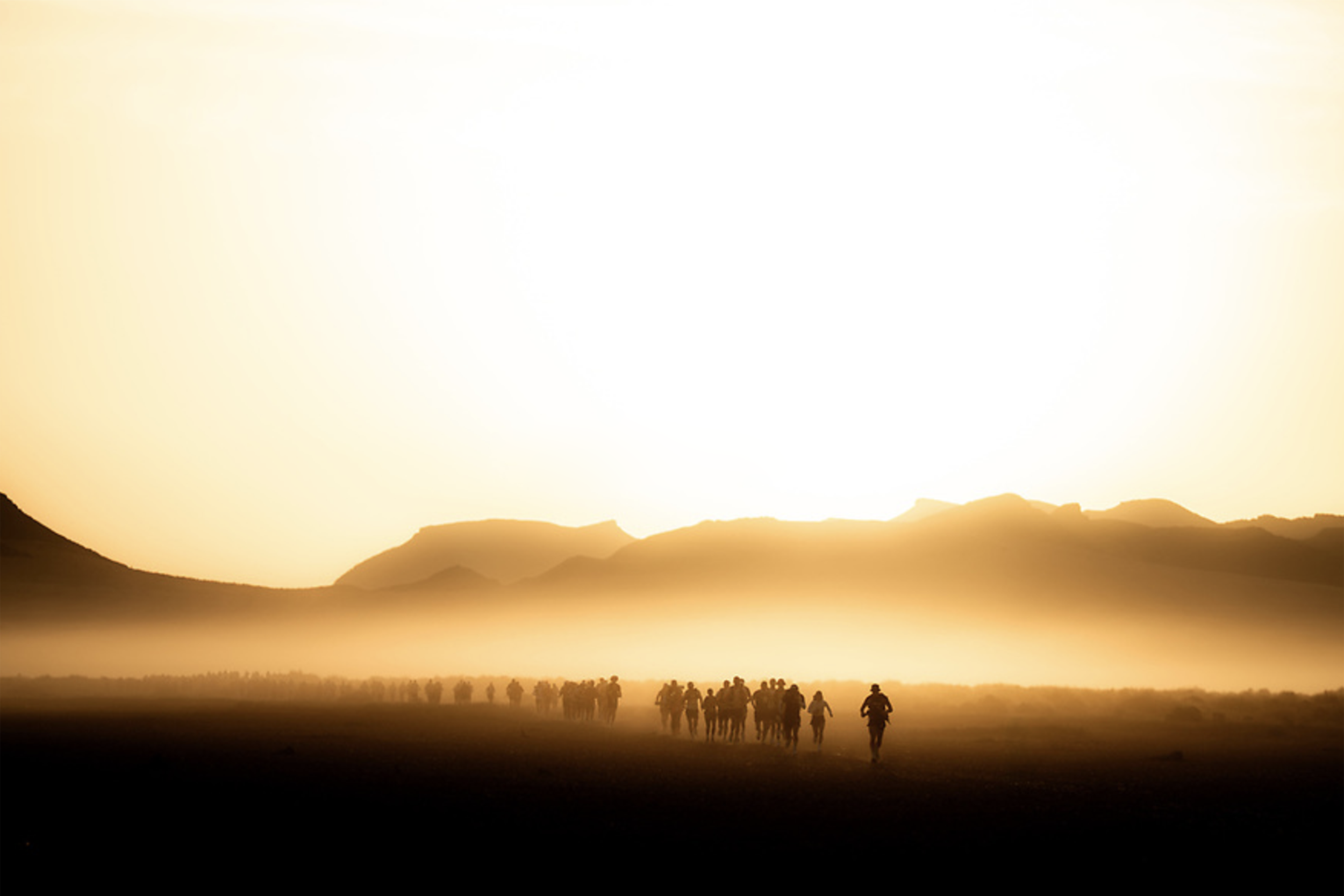
Each day started the same way, gathered at the start line, you are given your instructions about what to do, and what not to do. Each briefing (given in both English and French) ends with the now familiar rendition of Highway to Hell blasting out as the countdown begins. Checkpoints are located every 10-12km and offered the chance to top-up your two water bottles, and have iced water poured over your neck if you wanted it. A series of Berber tents were located at each one too giving people the chance to stop and take on nourishment, or simply rest before starting the next leg. Aside from Day 4, the ideal was to finish the stage by 2pm each day, therefore avoiding the mid afternoon heat, which was unforgiving. Well before the race started however, and on Days 1-3, everything was about the long day, gearing up for the 100km stage. I felt that if I could reach that, and complete it, then I was sure to finish the race, and take home the much coveted medal - something I value more than anything at the end of any competition!
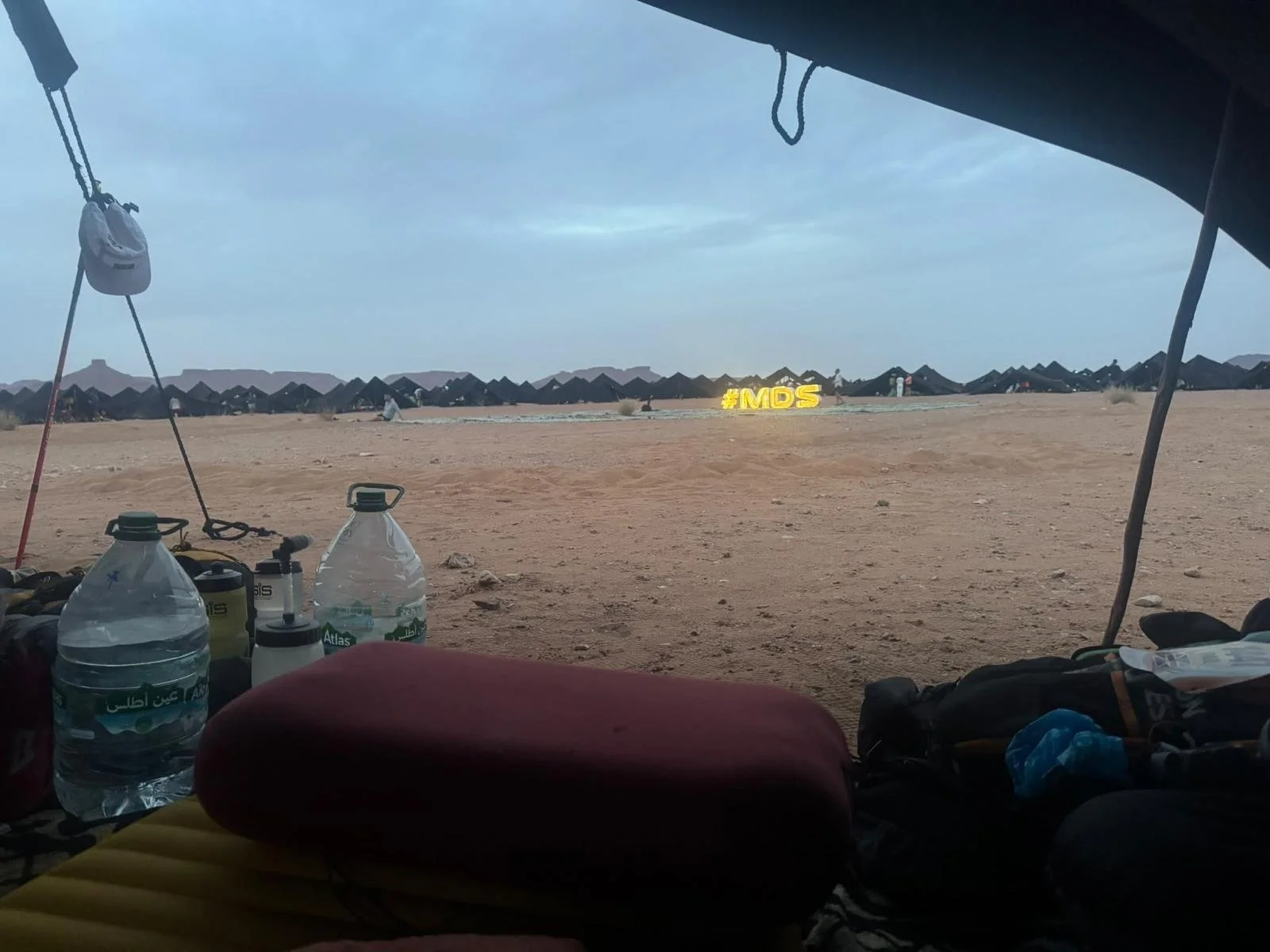
Life in the camp soon became the new norm with a routine that you could set your watch by. The alarm would go off 2hrs before the scheduled start time each day, which allowed time for mattresses to be deflated, and precious belongings packed up - all the while grabbing enough sustenance to get you through what lay ahead. Lights-out would be around 7pm each day when the camp would then fall silent. Days 1-3 passed without any major incident, but my feet were not in the best of shape. I had bought trainers that were half a size bigger but in reality, I should have gone a whole size up which would have helped. What I later learned was that the gaiters that were velcro’d to each shoe were pulling the front of it up towards my toes which, now heavily swollen, were taking the full force of each step. So now, and at the end of each day, I was not only queuing to see the doctors about my hand, I was having my feet bandaged having had multiple blisters dealt with!
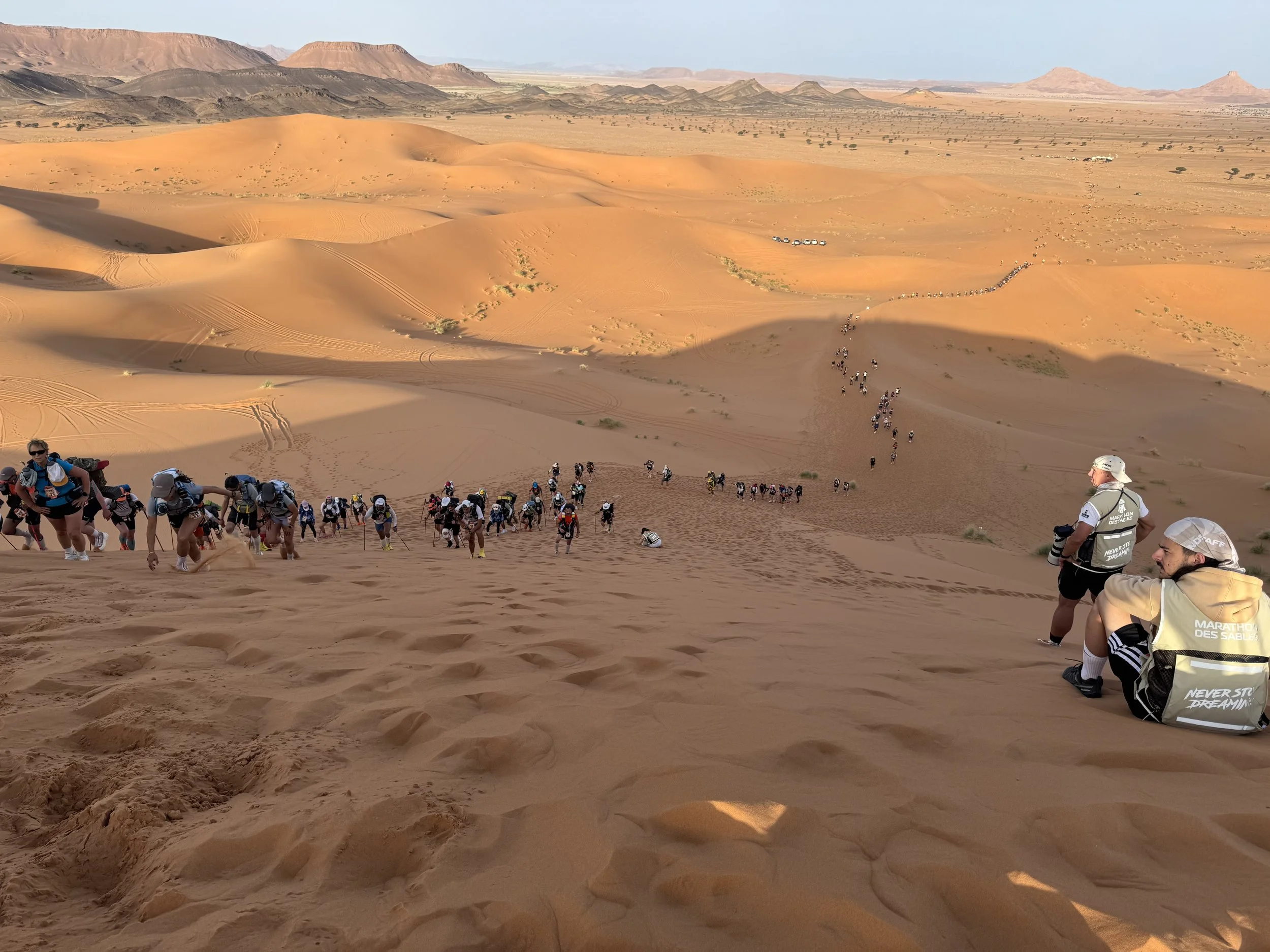
Day 4 arrived, and as we stood waiting for the 5am start, there was a sense that we had reached what MDS 2026 was all about, the much lauded 100km stage. Would I try and complete it in one go (as was my intention), or would I get to one of the checkpoints around the 70km-80km mark, and have a long rest, even a sleep. I had heard that people of my ability had previously completed the stage in approx. 18-20hrs, but that was when it was 84km - 100km was unknown and therefore difficult to gauge. I reached the 50km checkpoint at around 3pm and I have to say that I was very close to pulling out. Doubt had got into my head, and everything felt negative as a result. My rucksack felt like it had bricks in it, my feet hurt with every step, the heat was relentless, but the biggest concern was that I was trying to talk myself out of continuing … Knowing that I had only reached halfway was too was almost unbearable. With my rucksack off, I sat in one of the Berber tents and stared out of the back of it - towards a rugged terrain that went as far as the eye could see. I cannot pinpoint any one thing that made me get up 45mins later, but throughout the race, I often thought about the reasons why I was there, and all the incredible support from friends and family I had been given leading up to it. Prior to the race, I had elected to raise money for Diabetes UK in memory of my father who had passed away in December 2025, and that often crept into my head as a reason to push on … I reached the end of the stage at just after 6am the following day (Thursday | Day 5) having elected not to stop and rest for more than 15 minutes at the remaining checkpoints. The severe afternoon heat soon gaveway to the chill of the night/s which made my progress somewhat more bearable - the thought of a rest day too drove me on (even though our first sandstorm ripped through the camp 2 hours after I settled into my sleeping-bag).
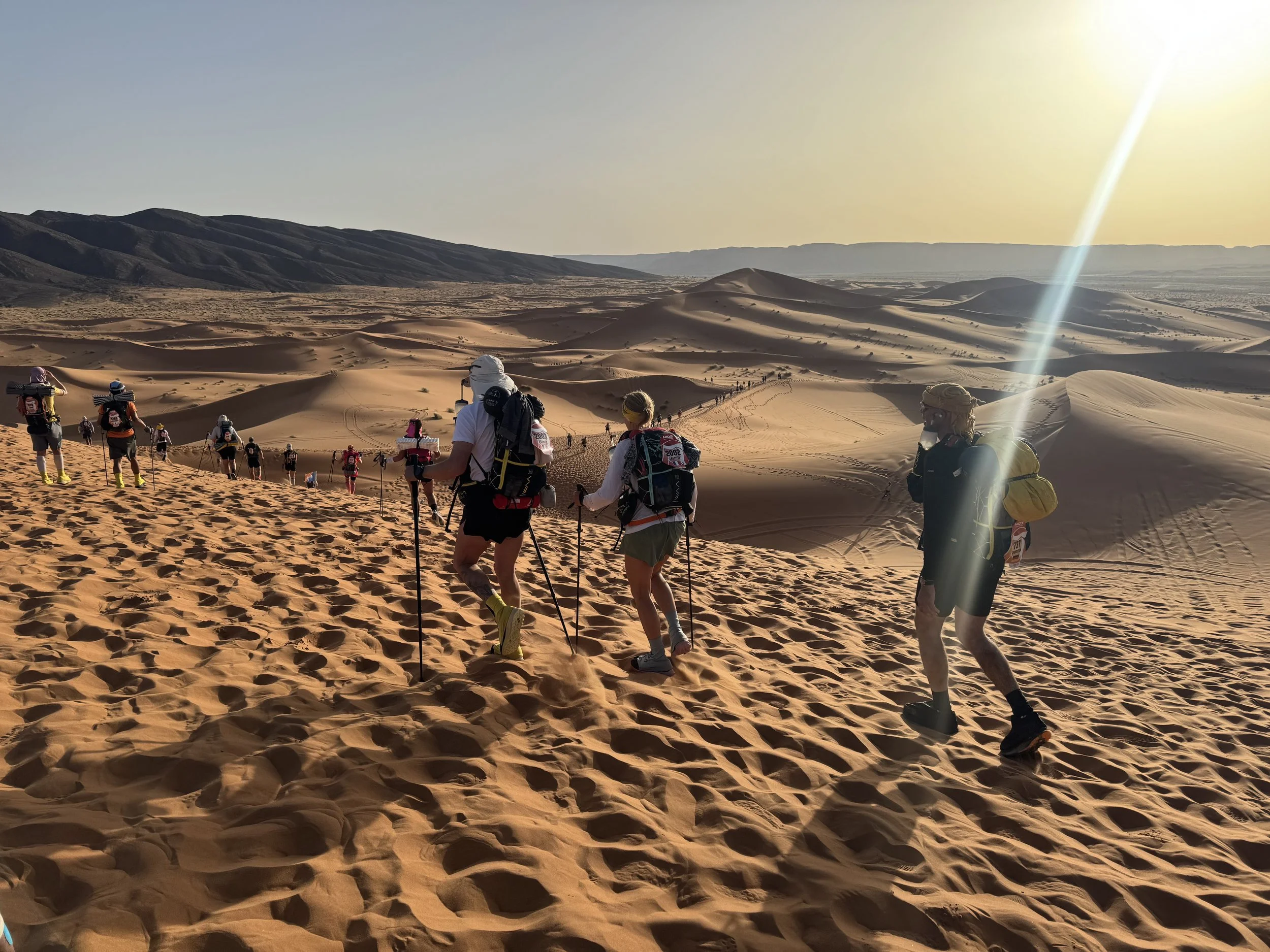
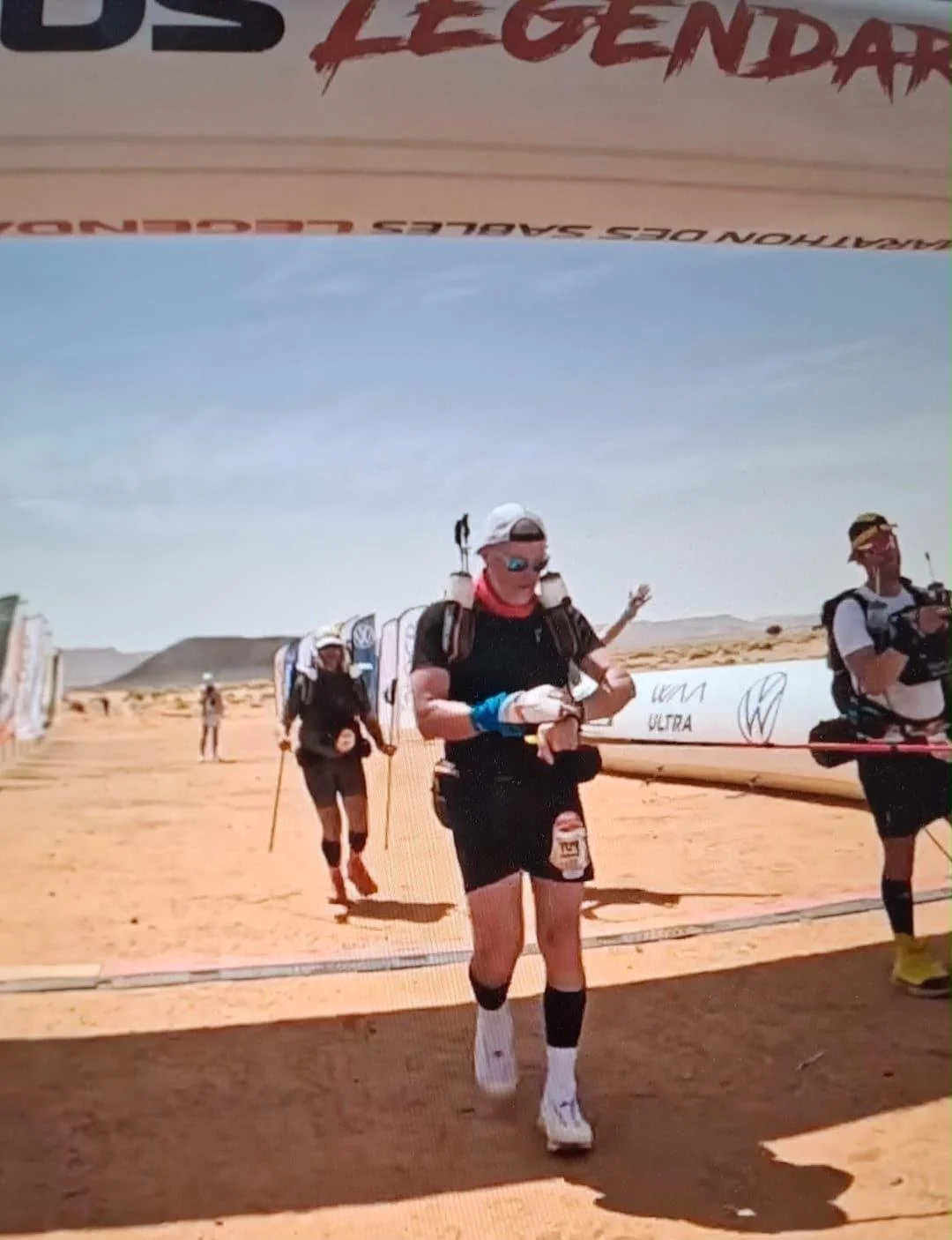
Although extremely tired, Days 6-7 happened without incident. As I crossed the finish line on Saturday, a huge emotional wave came over me as the reality of completing MDS finally hit me - all those questions that had been front and centre in my mind for so many months had finally been answered; I had completed the biggest challenge that I had ever faced to date.
Six months have passed since crossing the finish line, and it has given me a great deal of time to reflect. Perhaps the most surprising thing is just how much it has influenced me mentally, and I now look at challenges in a much more positive light than I once did. Since taking my running seriously at the beginning of 2024, I never imagined going on to compete in such an adventure a little over two years later but I did, and I would encourage anyone to go and sign up to a challenge that would otherwise have been viewed as unachievable. Ultra Marathons should not be seen as an event that requires you to run the entire length either, more as an opportunity to push yourself out of a comfort zone with the simple aim of reaching the finish line within the permitted time frame. One of the elements that I find most rewarding in any race, are my fellow competitors. Not only are they a great way of benchmarking yourself, but the sense of undertaking a challenge with people that are going through the same conditions as you is very empowering. Take for example my MDS tent mates, people that I had never met before (bar Petersfield Paul). By the end of the week, I would not have wanted to share the experience with anyone else such was their importance in my journey that week.
One of the things that I found the hardest prior to leaving for Morocco was not running as frequently, with my fellow Milers, as I had been prior to getting my MDS ’26 place. The simple reason for that was that my training was not really in sync with doing a ’speedy’ 10km on a Tuesday/Thursday/Sunday as was my norm up to that point. I had to get used to running slower, and for longer - almost on a daily basis - and that was hard to come to terms with early on. Looking back, I would have perhaps changed some of that mindset, because running with the Milers has always been a weekly highlight, it was the Midhurst Milers who got me to where I am today after all.
Looking ahead, I want to do more endurance challenges - I know that for sure, and I have my eye on one or two that are closer to home. The feeling is very much that of a rollercoaster from the moment you sign up, to the moment you cross the line, and that gives you quite a buzz. For me and in the case of MDS, that journey was 11 months which is a long time to come to terms with emotions that range from shear panic to immense relief and elation. I came away from MDS with a serious case of “what now??”; the feeling of emptiness was quite stark having focused on it for so long, and not knowing what type of runner I would be when I finished - whether I wanted to concentrate of shorter distances again, or focus on competing in more Ultras. Thanks to MDS, I now have a very clear understanding of what I get out of running both as an individual, and as part of a group; learnings that I can build upon and develop over time. That aside, the feeling is just the same as when I completed my first event - and that includes just how much I enjoy the freedom of running.
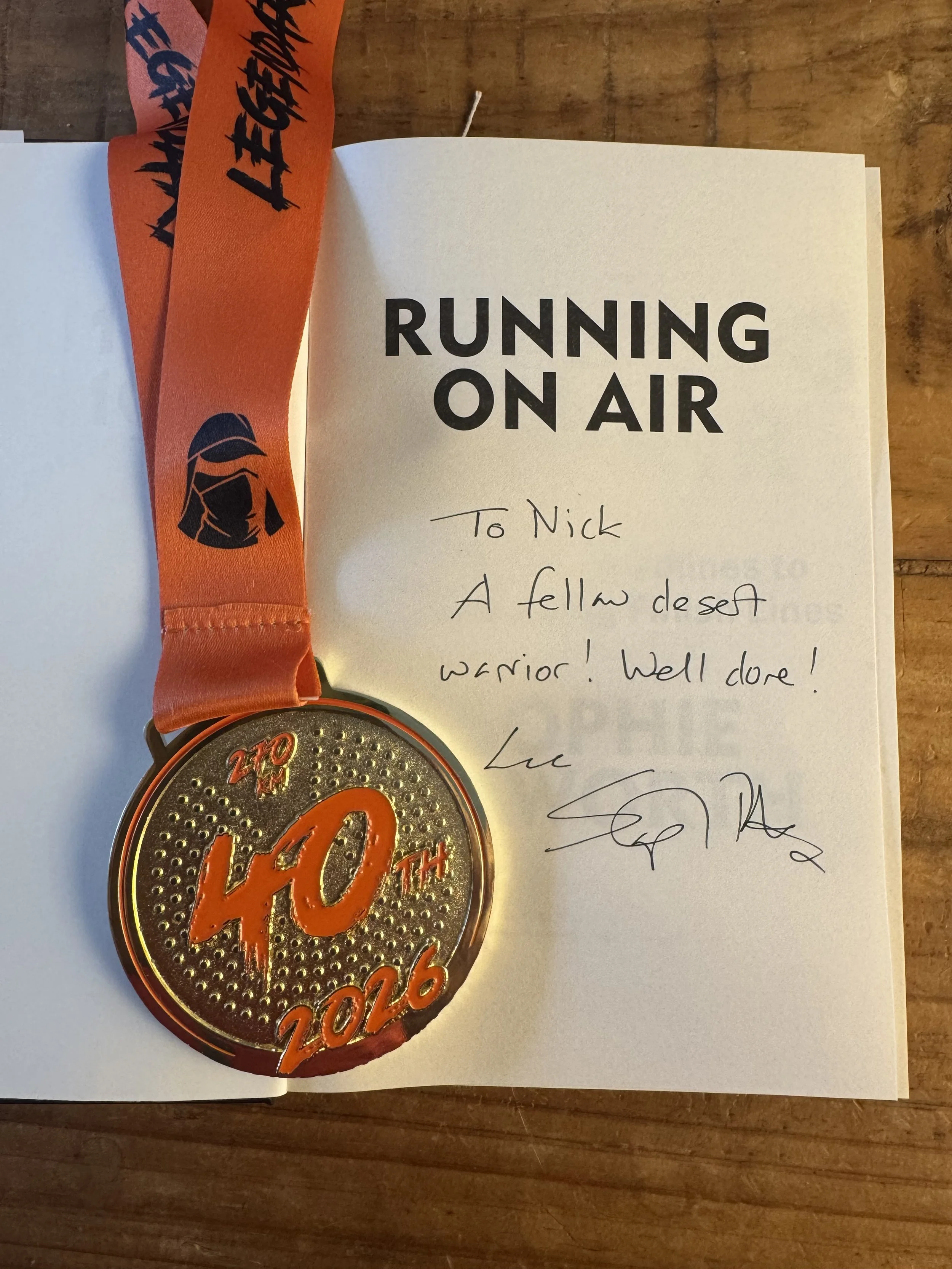
Would I do MDS again? For me, my goal was to finish it, which I was very lucky and proud to have achieved, so I am going to keep it as a very pleasant, and life changing memory. The 2026 edition was its 40th, and the first one to have the 100km long leg, so that is good enough for me. Would I encourage anyone to do it? Absolutely, it is an incredible journey - full of every emotion - and there is something very special about that.